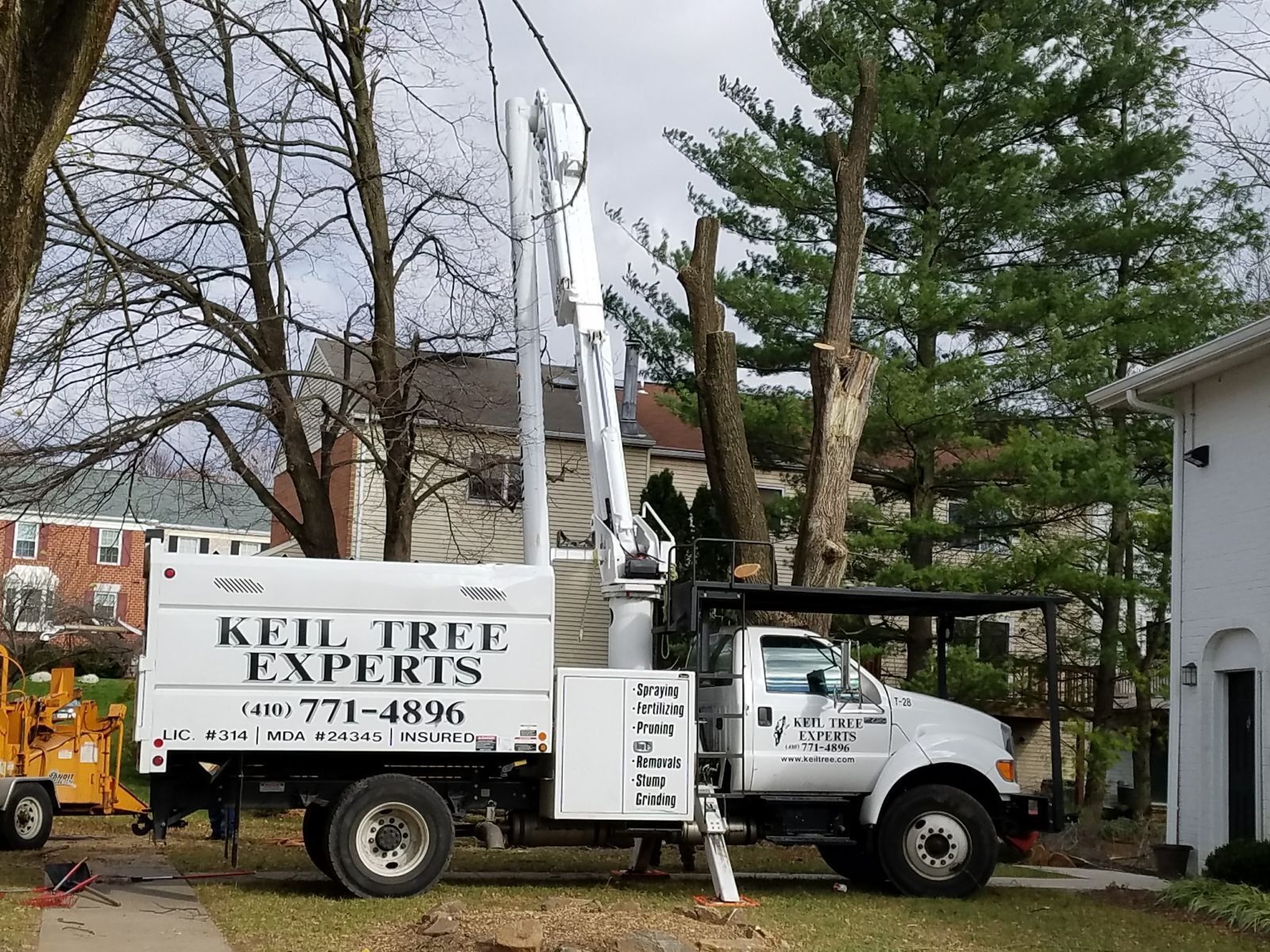
Stump Grinding in Pikesville Before Spring Landscaping: Access, Depth and Site Restoration
A stump can occupy the exact space intended for a new planting bed, a repaired lawn or a future walkway. Grinding it below the surface opens up possibilities, but the work needs to account for what happens afterward. Access, grinding depth and cleanup all influence the transition from tree work to landscaping.
At Keil Tree Experts, we approach stump grinding before spring landscaping in Pikesville, MD with that next use in mind. The evaluation considers the stump, its surroundings and the preparation required for the planned landscaping.
A clear plan establishes what the grinding work will accomplish, what material will remain and which restoration tasks need separate attention before planting or construction begins.
The landscaping plan helps define the grinding scope
The intended use of the area is an important starting point. Restoring grass, expanding a planting bed and preparing for a paved surface place different demands on the ground.
A lawn needs a suitable growing surface. A planting area needs adequate soil and room for roots. A walkway or patio requires preparation appropriate to its construction. Those differences help determine what needs to be evaluated before grinding begins.
Our stump removal and grinding services in Pikesville, MD begin with a property assessment. Connecting that assessment to the landscaping plan gives the project a more useful definition than simply removing the visible stump.
The work area may extend beyond the stump
The stump’s visible diameter does not always describe the full area relevant to the project. Flared wood near the base and surface roots may also affect a proposed lawn or planting area.
The assessment establishes which portions need attention and which fall outside the agreed work. That distinction is particularly important when a future improvement extends beyond the original tree location.
Access determines how the work can be carried out
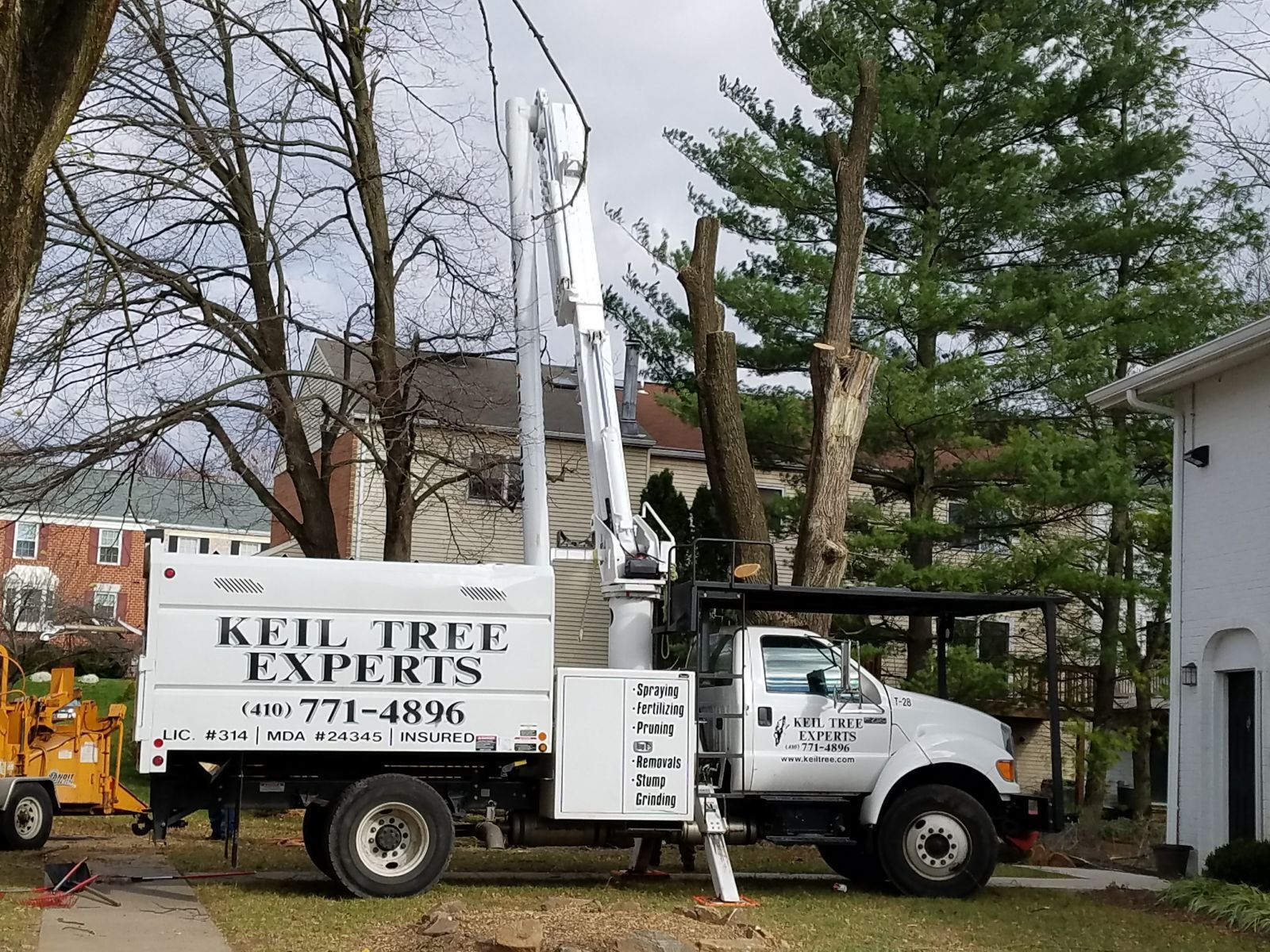
A stump in an open front lawn presents different access conditions from one behind a fence or beside a raised planting bed. The route to the work area matters as much as the space immediately around the stump.
In a Pikesville yard with established trees and landscaping, that route may pass close to features that will remain. Gates, turns, slopes, steps and paved surfaces all deserve attention during the assessment.
A clear route requires more than gate width
An opening may provide enough width while the approach still presents a tight turn or a change in elevation. Working space around the stump also affects how the operation can be organized.
Keil Tree Experts evaluates equipment access as part of the property inspection. Any temporary changes to fencing or other site features need to be discussed and assigned rather than assumed to be part of the service.
Ground conditions affect the access plan
Wet or soft ground can influence how equipment moves across a lawn. Winter and early-spring conditions may also change between the estimate and the scheduled work.
The access plan needs to reflect the property’s condition at the time of service. A workable route during one visit may require reassessment after prolonged precipitation or thawing.
Grinding depth needs a project-specific decision
Grinding depth is one of the most important details to establish before work begins. A standard number cannot account for every stump, site restriction or future use.
Keil’s published stump-grinding guidance explains that depth depends on the site, stump size, nearby roots and the homeowner’s plans. The recommendation therefore needs to connect the physical conditions with the proposed landscape improvement.
Lawn restoration and new planting have different needs
Lowering a stump beneath the surface can create room for subsequent lawn preparation. A new tree or larger shrub presents a different question because its roots need suitable soil and adequate space.
Grinding the stump does not automatically establish that the exact location is ready for a replacement tree. Remaining wood, roots and soil conditions still need evaluation when the planting plan is developed.
A future hardscape requires coordination
A patio or walkway may require excavation beyond the grinding area or below the proposed grinding depth. The person responsible for that construction needs a clear understanding of what the stump work will leave behind.
Coordinating those requirements beforehand helps prevent the landscaping project from relying on assumptions about subsurface clearance.
What does your landscaping plan require below the surface?
Our stump grinding service provides a starting point for discussing access, the proposed grinding area and cleanup expectations before spring improvements move forward.
Cleanup and landscape restoration are separate decisions
Grinding produces a mixture of wood fragments and soil. Managing that material is part of defining the finish, but a tidy work area and a planting-ready surface are different outcomes.
Keil’s Pikesville service page describes cleanup and excess-debris handling. The project discussion still needs to establish the intended finish and how it relates to the homeowner’s next step.
Remaining material affects what comes next
Material left in the grinding area needs to be considered during soil preparation. A space intended for grass or planting may require further work before it can support that use.
The amount of material retained, removed or replaced belongs in the scope discussion. The appropriate approach depends on the planned landscape treatment and the conditions found on site.
Soil, seeding and planting need clear responsibilities
Grinding does not by itself establish a completed lawn, planting bed or construction base. Soil replacement, final grading, seeding, sod installation and planting are distinct tasks.
A responsible proposal makes the agreed work understandable. Any additional restoration services need confirmation, along with a clear assignment of who will perform them. That gives the homeowner and any landscaping contractor a shared understanding of the next stage.
Early coordination supports a realistic spring schedule
Planning stump grinding before the landscaping work begins gives the project room for assessment, access arrangements and coordination with the next contractor.
The sequence matters. Grinding needs to occur before new planting or finished surfaces restrict access to the stump. Any follow-up soil preparation then needs its own place in the schedule.
Completion dates depend on site conditions, the agreed scope and availability. Early planning helps resolve decisions in advance without guaranteeing that every property will be ready for landscaping on the same date.
For a Pikesville homeowner, the practical benefit is continuity: the tree work and the landscape work can follow a defined sequence rather than being treated as unrelated jobs.
A clear finish starts with a clear agreement
Successful stump grinding addresses the obstacle while giving the homeowner an accurate understanding of the site afterward. Access establishes how the work can proceed. Depth defines the proposed below-grade treatment. Cleanup and restoration decisions establish the handoff to the next stage.
At Keil Tree Experts, we bring professional tree-care experience to that evaluation. The goal is a recommendation grounded in the property, with a defined scope and realistic expectations for the landscaping that follows.
Ready to Prepare Your Pikesville Yard for Spring Landscaping?
Request a free estimate from Keil Tree Experts to discuss your stump, property access and intended use of the area. A site assessment can establish the proposed grinding work and clarify the next steps toward restoration.
Related stump grinding and spring tree care resources