What determines the cost and scope of tree removal in Cockeysville?
Tree removal is not defined by a tree’s height alone. Its condition, position, surrounding structures, available access and required cleanup all influence how the work must be planned.
A tree growing in an open section of a property may allow for a different approach than one extending over a roof, driveway, fence or neighboring yard. A healthy tree being removed for a construction project also presents different conditions from a declining tree with damaged limbs or internal decay.
For property owners researching tree removal in Cockeysville, MD, an on-site assessment is the most reliable way to understand the work involved. The assessment allows an arborist to evaluate the tree and determine how it can be addressed while protecting the surrounding property.
The tree’s condition determines the starting point
Before planning the removal, an arborist must determine what is happening with the tree. Visible symptoms can provide useful information, but they do not always reveal the full condition of the trunk, branches or root system.
A tree may require further evaluation when it develops substantial deadwood, fungal growth, cavities, cracking, storm damage or a noticeable change in lean. Declining foliage and peeling bark can also justify a closer inspection, particularly when several symptoms appear together.
These conditions influence more than the decision to remove the tree. They can affect whether branches can support normal climbing or rigging methods and whether damaged sections require additional control during removal.
A compromised tree may need to be dismantled differently from a structurally sound tree. This is why a tree removal estimate should begin with an evaluation rather than a price based only on photographs or an approximate height.
Removal is not always the first recommendation
A large or overgrown tree does not automatically need to be removed. If its principal structure remains sound, selective maintenance may address dead branches, excessive weight or conflicts with nearby structures.
Professional tree pruning and trimming may help improve clearance, remove hazardous limbs or support a more balanced canopy. The appropriate recommendation depends on the tree’s condition, species, structure and location.
Pruning is not a substitute for removal when the trunk, roots or major structural unions are significantly compromised. However, evaluating both options prevents a homeowner from assuming that every visible problem requires the loss of the entire tree.
An arborist assessment should explain whether the tree can reasonably be retained, whether pruning could reduce the concern or whether removal is the safer long-term option.
Tree size affects more than the amount of wood
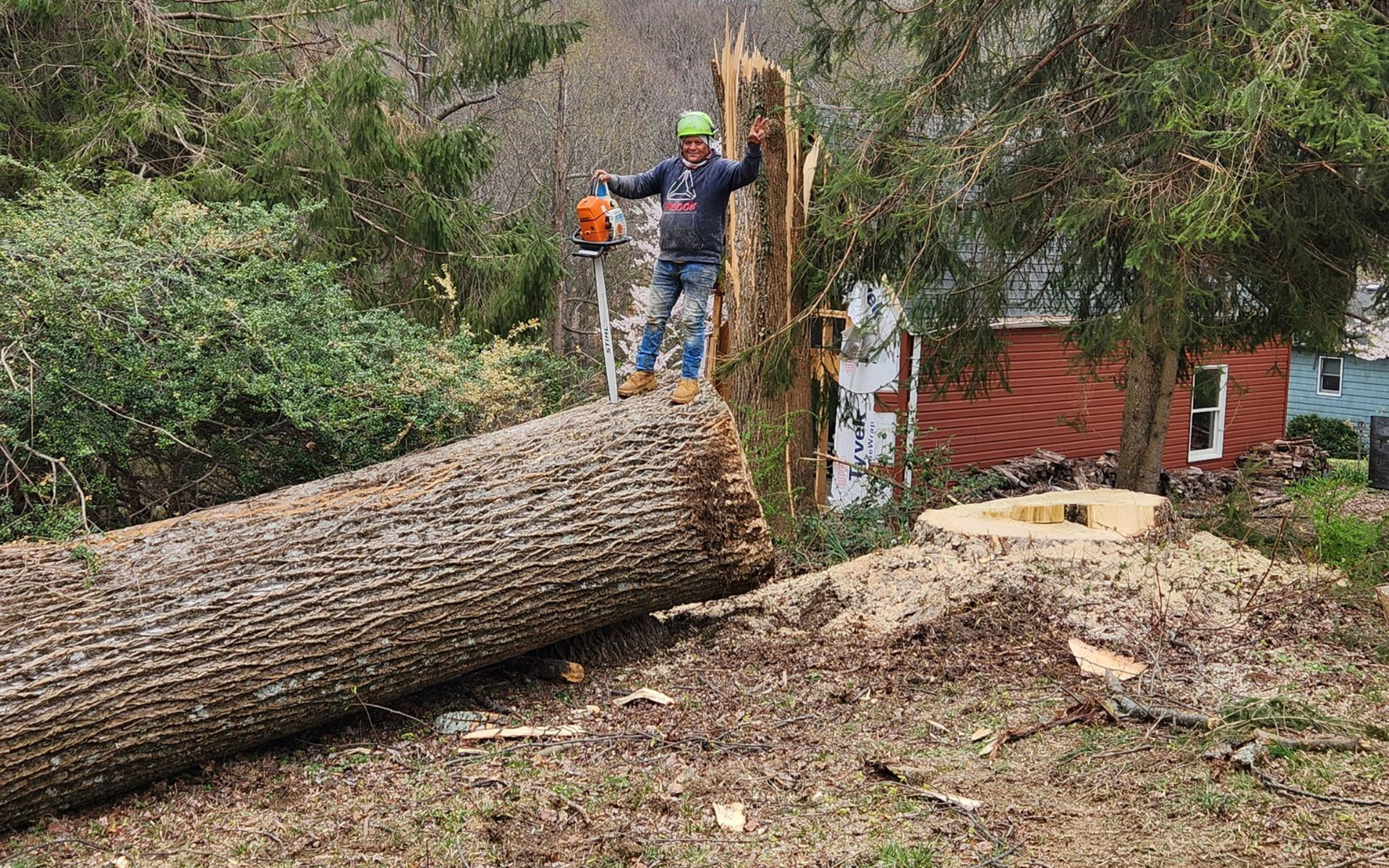
Height and trunk diameter influence the scope because they affect the weight and volume of material being managed. Large branches and trunk sections require controlled handling, sufficient working space and equipment appropriate for the property.
Canopy spread also matters. A moderately tall tree with broad limbs extending over several parts of the property may require more planning than a taller tree growing in an unobstructed area.
The estimate may also account for multiple trunks, heavy lateral limbs or an unbalanced canopy. These characteristics influence how the tree is divided and the sequence in which sections can be lowered.
The important question is not simply, “How tall is the tree?” It is, “How can every section be removed without creating unnecessary risk to the property below?”
Nearby structures can change the removal method
Many Cockeysville properties contain mature trees near homes, detached garages, driveways, patios, fences and landscape beds. These features can limit where branches and trunk sections may be placed.
Trees near homes and roofs
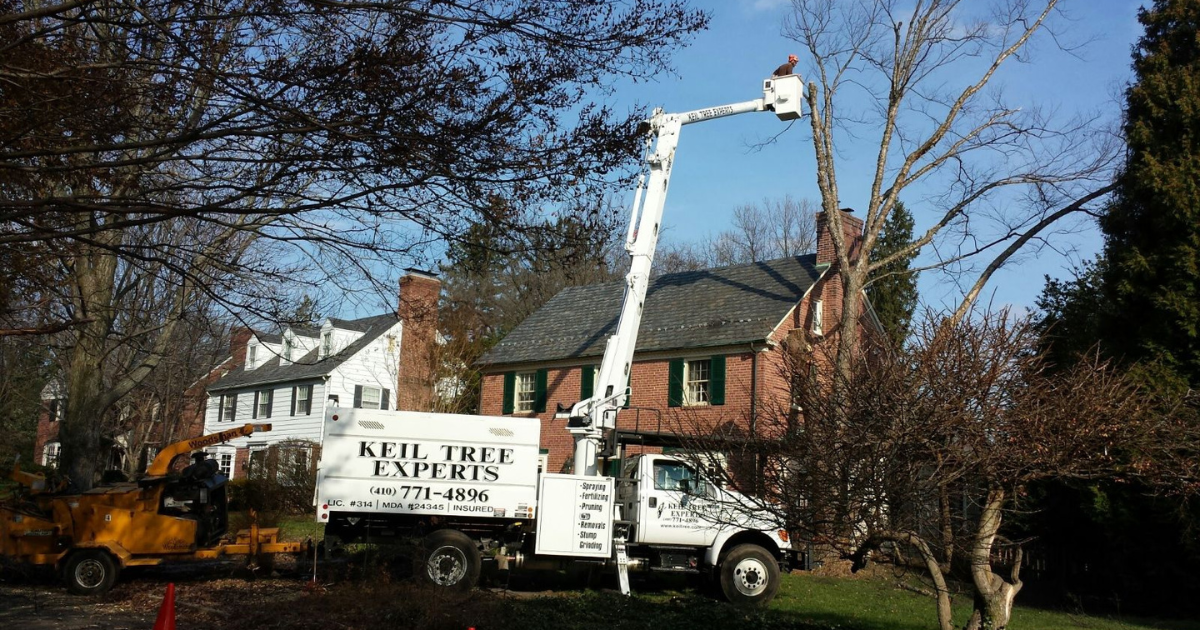
When branches extend over a roof, the removal plan must account for shingles, gutters, windows and exterior equipment. Sections may need to be controlled and lowered instead of being allowed to fall into an open area.
The location of the main trunk also matters. A tree positioned between a home and a neighboring property may provide little room for movement, equipment or debris staging.
Driveways, fences and neighboring property
Driveway surfaces, retaining walls and fences may require protection during the project. The crew must also identify whether any portion of the canopy crosses a property line or restricts access to an adjacent yard.
Homeowners should clarify ownership and access before scheduling work involving neighboring property. These details can affect the approved work area and prevent avoidable delays on the service date.
Access determines which equipment can be used
The route between the street and the tree is an important part of the assessment. A wide driveway and open lawn provide different options from a fenced backyard with a narrow gate.
Crews may need to consider gate width, overhead branches, utility lines, landscaped areas, septic components and the strength of paved surfaces. Sloped, soft or saturated ground can also restrict where equipment may be positioned.
Limited access does not necessarily prevent tree removal, but it can change how materials are handled. Wood and branches may need to be processed in smaller sections or moved farther before they can be loaded.
Property owners can help by identifying irrigation equipment, underground systems and access restrictions during the consultation. The estimate should be based on the actual route rather than the assumption that all parts of the property are equally accessible.
Concerned about a damaged, declining or poorly positioned tree?
Schedule a tree assessment with Keil Tree Experts to review its condition, nearby structures, property access and the work required for safe removal.
Utilities require additional planning
Trees growing near overhead service lines or other utilities require careful evaluation. Branches can obscure lines from ground level, and roots may extend through areas containing underground services.
Property owners should point out known utility locations and avoid assuming that visible clearance is sufficient. The contractor can then determine what coordination or working limitations may apply.
Utility proximity can influence equipment placement, the direction in which sections are moved and whether another party must address part of the work. These conditions should be identified before the project begins rather than discovered after the crew arrives.
Terrain and soil conditions influence site protection
A tree on a slope, beside a retaining wall or near a drainage area can require a different plan from one on level, stable ground. Equipment must be positioned safely, and the crew needs a workable route for removing branches and logs.
Wet or recently disturbed soil may also be more vulnerable to rutting or compaction. If the property has drainage problems, soft ground or newly installed landscaping, mention those conditions during the assessment.
Site protection expectations should be included in the conversation about scope. Homeowners should understand where equipment may travel, which areas need to remain clear and how the work zone will be managed.
Cleanup choices affect the estimate
Removing the standing tree and restoring the work area are related but separate parts of the project. Before accepting an estimate, determine what will happen to the branches, logs, wood chips and smaller debris.
Some property owners want all material removed. Others may want usable firewood or wood chips left in an agreed location. The estimate should state what is included so that cleanup expectations are clear.
The stump also requires a separate decision. Cutting the tree near ground level generally leaves the stump and root flare in place. If the area will be used for lawn restoration, landscaping or another improvement, stump removal and grinding in Cockeysville may need to be included in the plan.
Stump grinding can require its own equipment access and underground-utility considerations. Discussing it before the removal helps coordinate the complete project.
Planned and emergency removals follow different priorities
A planned removal allows time to evaluate access, select the work date and prepare the surrounding property. Homeowners can move vehicles, furniture and portable outdoor items before the crew arrives.
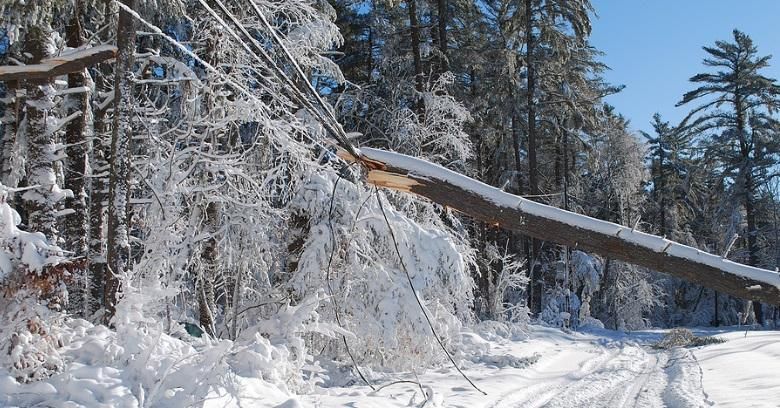
Storm-damaged trees may require a more immediate response. A fallen tree, split trunk or suspended limb can create changing conditions, especially when it affects a home, driveway or commonly used area.
If a tree or limb presents an urgent hazard, keep people and pets away from the area. Do not pull on branches, climb the tree or attempt to cut material that is under tension. Professional emergency tree service can evaluate the condition and determine how to stabilize or remove the hazard.
Urgent service may differ in scope from planned work because immediate safety and access restoration become the first priorities.
What should a tree removal estimate include?
A useful estimate should identify the tree or trees included and describe the principal work being proposed. It should also clarify access assumptions, debris handling, stump work and relevant property-protection measures.
The estimate should make clear whether the project covers:
- Removal of the standing tree
- Processing and hauling branches and logs
- Wood-chip or firewood placement
- Stump grinding
- Final work-area cleanup
Ask how unexpected conditions will be handled if the crew discovers additional decay or another issue that was not visible during the initial assessment. Clear responsibilities make it easier to compare proposals based on the actual work rather than the final price alone.
Prepare the property before removal day
Once the work is scheduled, confirm which areas need to remain open. Vehicles, patio furniture, portable planters and decorations should be moved away from the work zone and access route.
Keep children and pets indoors or in another secure area. If the crew needs access through a gate or shared driveway, make the necessary arrangements before arrival.
The contractor should identify any special preparation related to utilities, parking or neighboring property. Good preparation reduces delays and allows the crew to follow the planned removal sequence.
Plan tree removal in Cockeysville with Keil Tree Experts
The scope of a tree removal project depends on the complete site, not just the tree. Condition, size, canopy spread, nearby structures, equipment access, terrain, utilities and cleanup choices all affect the work plan.
Keil Tree Experts provides professional tree care for Cockeysville property owners, including tree removal, pruning, stump grinding, arborist evaluations and emergency service.
Request a free tree removal estimate
Related tree care resources