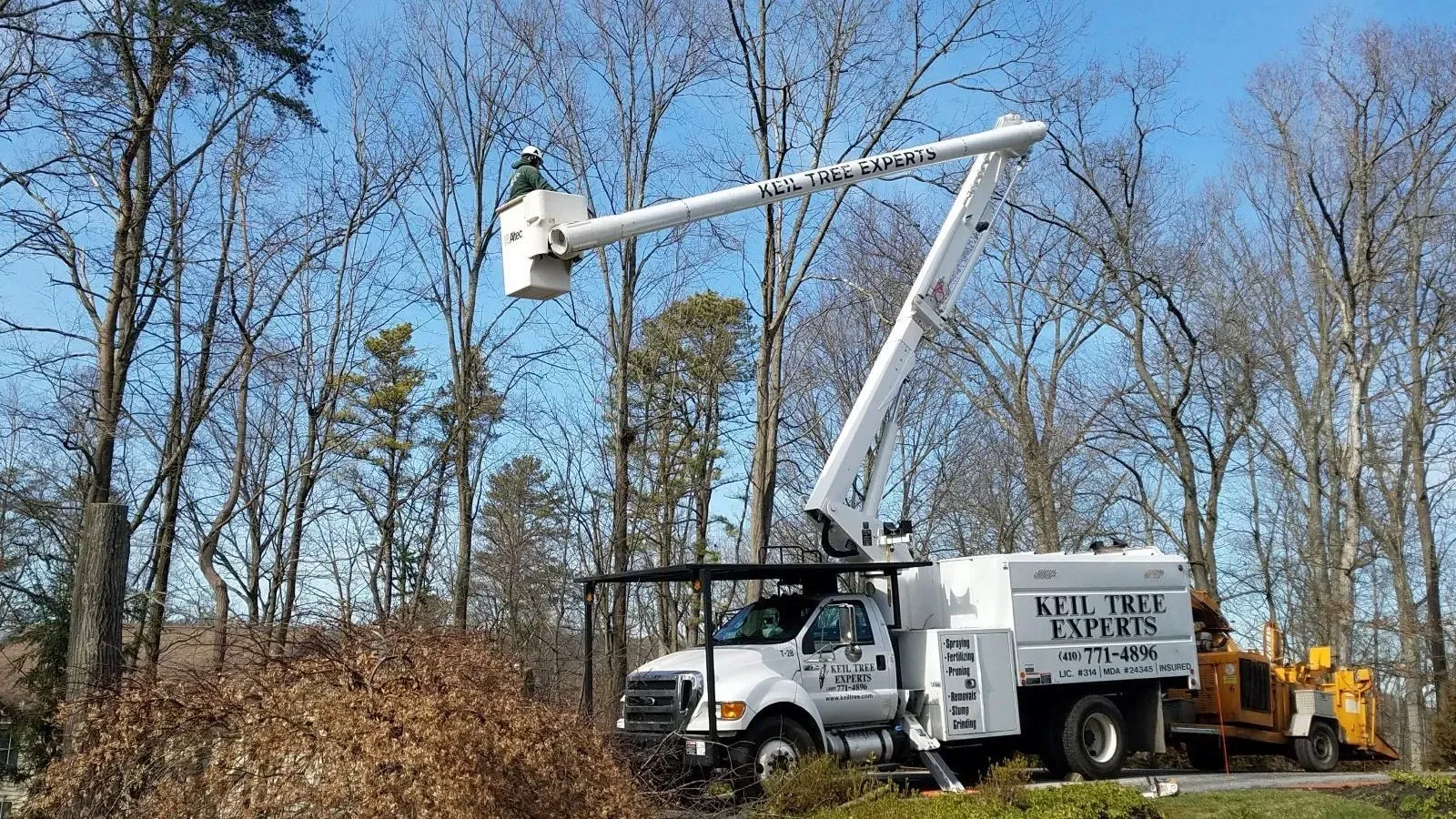
Fall tree care for large properties in Jarrettsville
Large and wooded properties often contain trees in very different conditions. Some may frame the home or provide shade near outdoor living areas, while others grow along driveways, property boundaries, fields and wooded edges.
Maintaining every tree in the same way is neither practical nor necessary. The most effective approach is to identify which trees could affect people, buildings or access if they lose a branch or fail.
For property owners researching tree services in Jarrettsville, MD, fall is a useful time to establish those priorities. Changes in foliage, visible deadwood and declining branches can be documented before winter, while areas of concern can be inspected before ice, wind and saturated soil increase the strain on weakened trees.
At Keil Tree Experts, we evaluate the tree and its relationship to the property. That allows us to recommend monitoring, selective pruning or removal based on the actual level of concern.
Begin with the areas that matter most
A large property may contain more trees than a homeowner can evaluate individually. Instead of starting with every tree, begin with the areas where a failure would have the greatest consequences.
Trees near the home, garage, barns, sheds, driveways, utility areas and frequently used outdoor spaces deserve priority. Trees along property lines may also require attention if their branches extend over a neighboring structure or shared access point.
This risk-based approach does not assume that every large or mature tree is dangerous. It simply directs the first inspection toward trees that could cause damage or interrupt access.
Homeowners can review Keil Tree Experts’ complete range of tree services in Jarrettsville, MD when deciding which type of evaluation may be appropriate.
Walk the property before the leaves are completely gone
Before scheduling an assessment, walk the property from a safe distance and note visible changes. You do not need to diagnose the problem yourself.
Look for branches without foliage while the surrounding canopy remains active, sections that have declined since the previous year, new leaning, broken limbs and changes around the base of the tree.
Photographs can help document conditions that may change between seasons. Take wider images showing the complete tree and surrounding structures rather than only close-ups of bark or leaves.
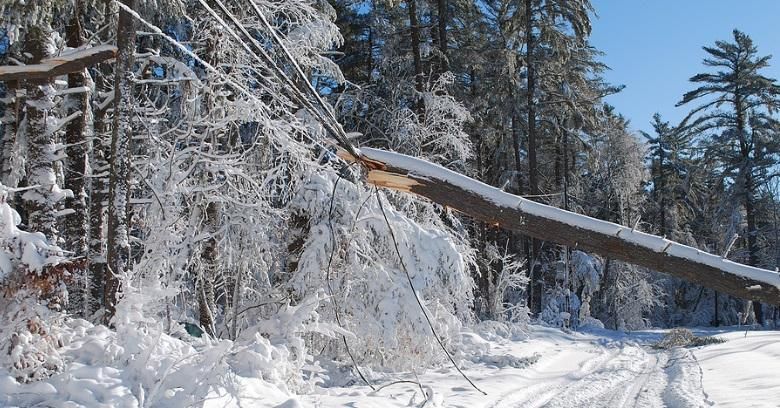
If you notice a hanging limb, split trunk, recently uprooted tree or contact with utility lines, remain outside the area and contact an appropriate professional. Do not walk underneath the tree to obtain a better photograph.
Separate routine maintenance from safety priorities
Not every tree concern requires immediate work. A useful property plan separates routine maintenance from conditions that should be addressed sooner.
A healthy tree may need selective pruning to improve clearance or remove deadwood. Another tree may have a developing structural problem that should be monitored. A severely compromised tree near a structure may require planned removal.
Routine pruning priorities
Routine pruning may focus on branches extending toward a roof, rubbing against other limbs or interfering with driveway clearance. It can also address manageable deadwood and uneven canopy growth.
The goal should be selective improvement, not removing large portions of healthy foliage simply because the tree is tall.
Conditions that require closer evaluation
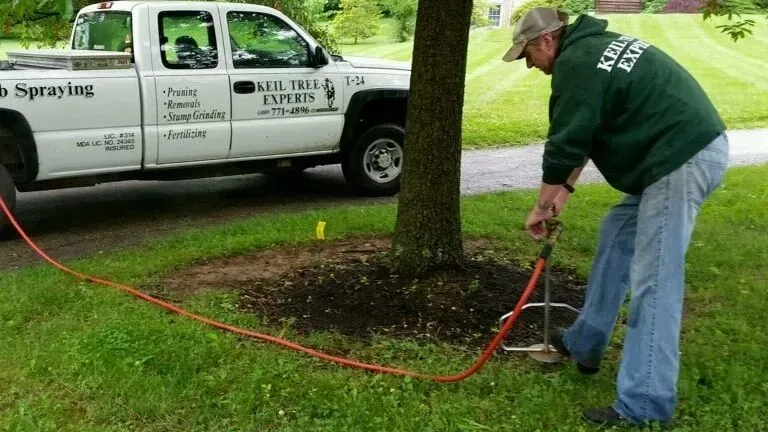
Cracks, cavities, fungal growth, significant canopy thinning and changes around the roots may warrant an arborist assessment. These signs do not automatically mean that the tree needs to be removed, but they should be interpreted together.
Keil Tree Experts provides certified arborist services in Jarrettsville to help property owners understand whether a tree can be maintained safely or requires a different plan.
Urgent safety concerns
A newly leaning tree, broken suspended limb, split trunk or visible root movement can present a more immediate concern, especially near a home, driveway or frequently used area.
Restrict access to the area and request professional guidance. Emergency conditions should not be treated as routine pruning work.
Evaluate trees along long driveways and access routes
Driveways are especially important on larger Jarrettsville properties. A failed tree or heavy branch can block access for residents, deliveries and emergency vehicles.
Trees lining a driveway may also have limited growing space because of grading, compacted soil or previous construction. Their branches can extend over vehicles while their roots interact with the drive surface and drainage areas.
An arborist should evaluate whether branches need selective clearance and whether trees with visible decline could obstruct the route during severe weather.
Pruning should preserve the tree’s structure while creating sufficient practical clearance. Removing branches from only one side without considering canopy balance may create additional stress.
Pay attention to wooded edges
Trees along the edge of a wooded area experience different conditions from trees growing within a protected stand.
Edge trees may receive stronger wind exposure and develop wider, heavier canopies toward open space. If nearby trees have been removed, the remaining trees may suddenly experience forces they were not previously exposed to.
A tree leaning toward an open field is different from one leaning toward a house, barn or neighboring property. Location must be considered alongside the tree’s structure.
The assessment should prioritize dead or unstable trees capable of reaching a structure, driveway, fence or recreational area. Trees deeper within the woods may require a different level of management when they do not threaten people or improvements.
Consider the effects of previous construction
Tree decline can begin years after grading, trenching, driveway expansion or construction near the root area.
Heavy equipment may compact soil, while excavation can damage roots that support the tree or supply water to the canopy. Changes to drainage can also leave the root area consistently wetter or drier than before.
Tell the arborist about recent additions, septic work, fencing, utility installation or land disturbance near the tree. This history can help explain changes that are not obvious from the canopy alone.
A stressed tree may benefit from monitoring, pruning or another form of care. When root loss occurs alongside a growing lean or trunk defect, removal may need to be considered.
Concerned about mature trees near your Jarrettsville home, driveway or outbuildings?
Request a tree assessment from Keil Tree Experts to prioritize pruning, removal and monitoring before winter weather arrives.
Use pruning to address defined concerns
Professional pruning should have a clear objective. On a large property, that may include removing deadwood over a driveway, improving clearance from a roof or reducing stress on a weak branch union.
The appropriate amount of pruning depends on the tree’s species, maturity and condition. Removing too much live growth can reduce the tree’s ability to produce energy and may trigger undesirable new growth.
Topping should not be used as a general solution for a tree that has outgrown its location. Large indiscriminate cuts can damage the tree and create weak future branch attachments.
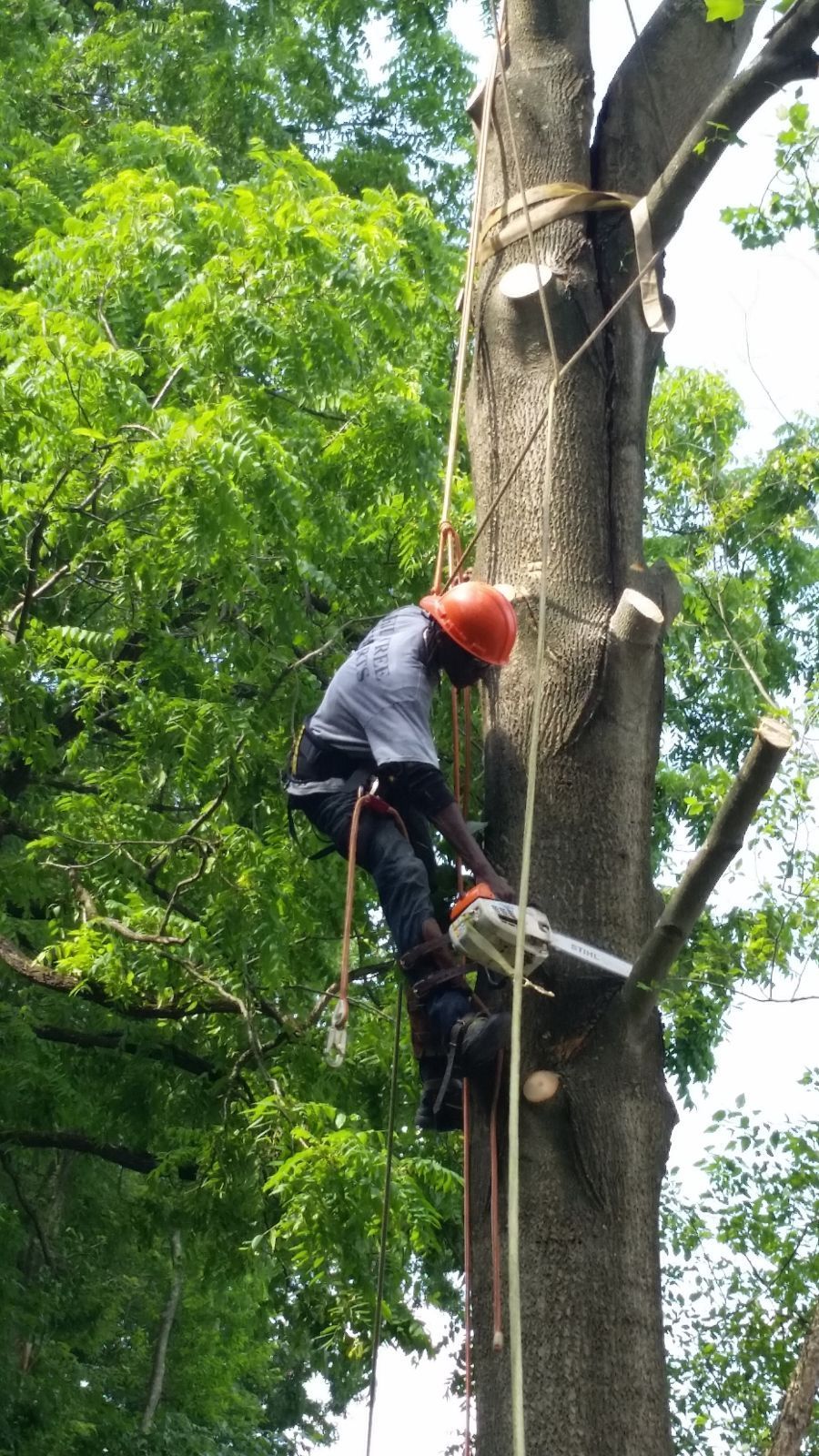
Keil Tree Experts provides tree trimming and pruning in Jarrettsville based on the tree’s structure and the way the surrounding area is used.
Know when removal becomes part of the plan
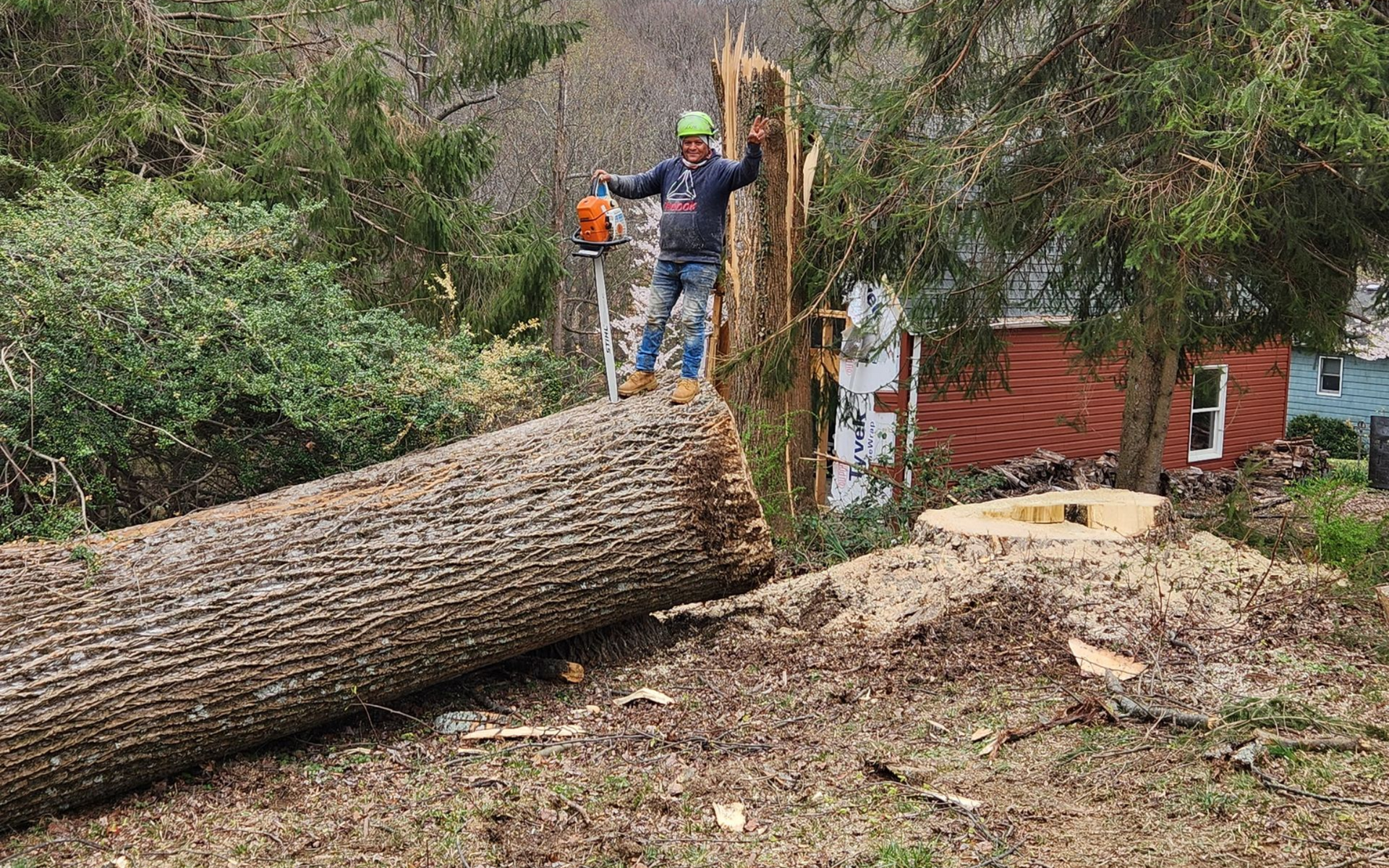
Removal may be appropriate when a tree has advanced decline, serious structural damage or an unsuitable location that cannot be managed through pruning.
The recommendation should account for both the likelihood of failure and what the tree could strike. A declining tree in a low-use wooded area may not carry the same priority as a similar tree beside a bedroom, garage or primary driveway.
Size alone does not determine whether removal is necessary. Mature trees can remain valuable property features when they are structurally suitable. Conversely, a smaller tree with root instability or severe trunk damage may require faster action.
If removal is recommended, the estimate should explain why the tree cannot be managed reasonably through pruning or monitoring. Property owners can learn more about controlled tree removal in Jarrettsville, MD.
Plan access before work is scheduled
Large properties may provide more working space, but they can also create distinct access challenges.
Narrow gates, soft ground, slopes, drainage areas and long distances from the road can affect how equipment reaches the tree. Fences, gardens, septic components and outbuildings may further restrict movement.
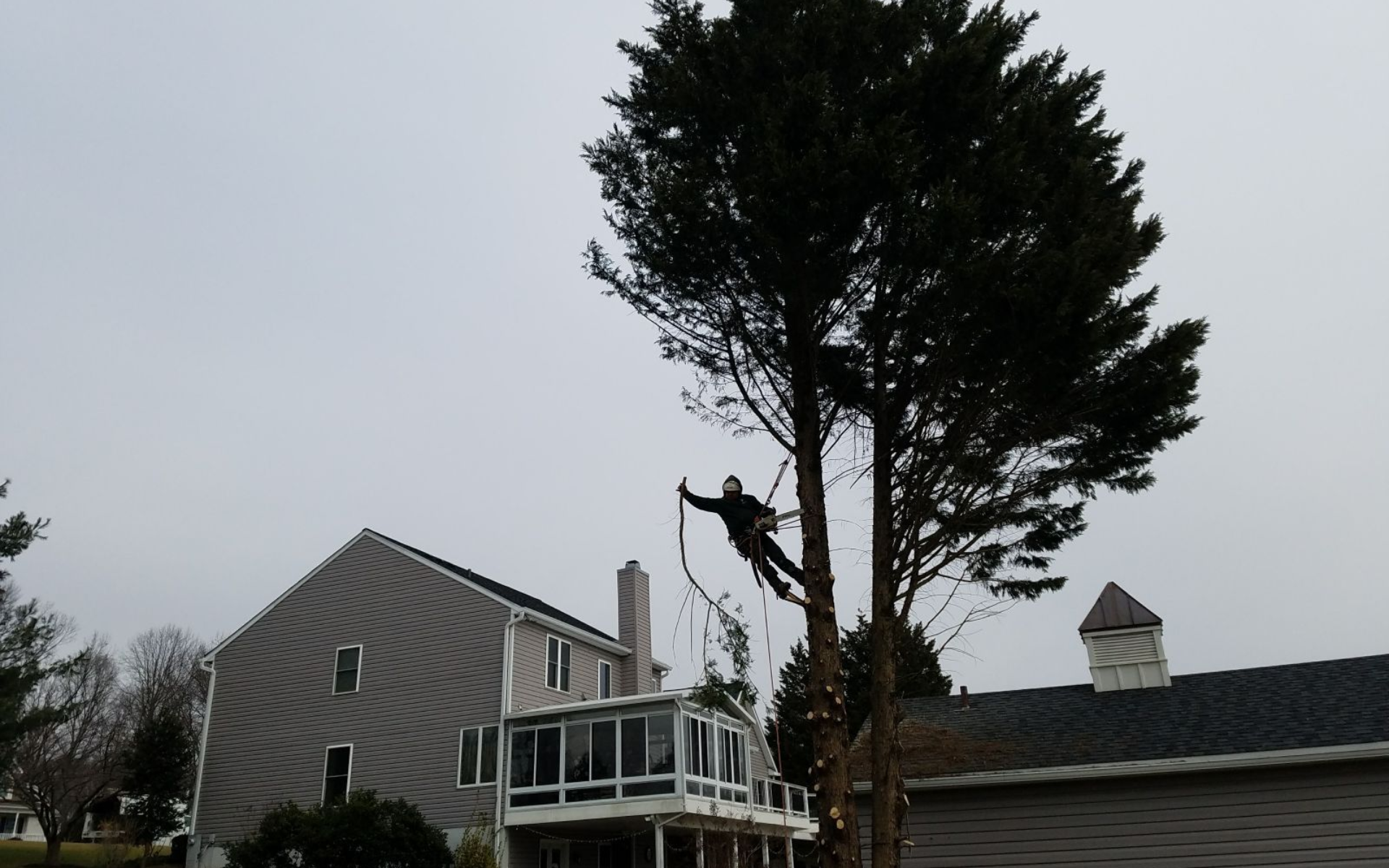
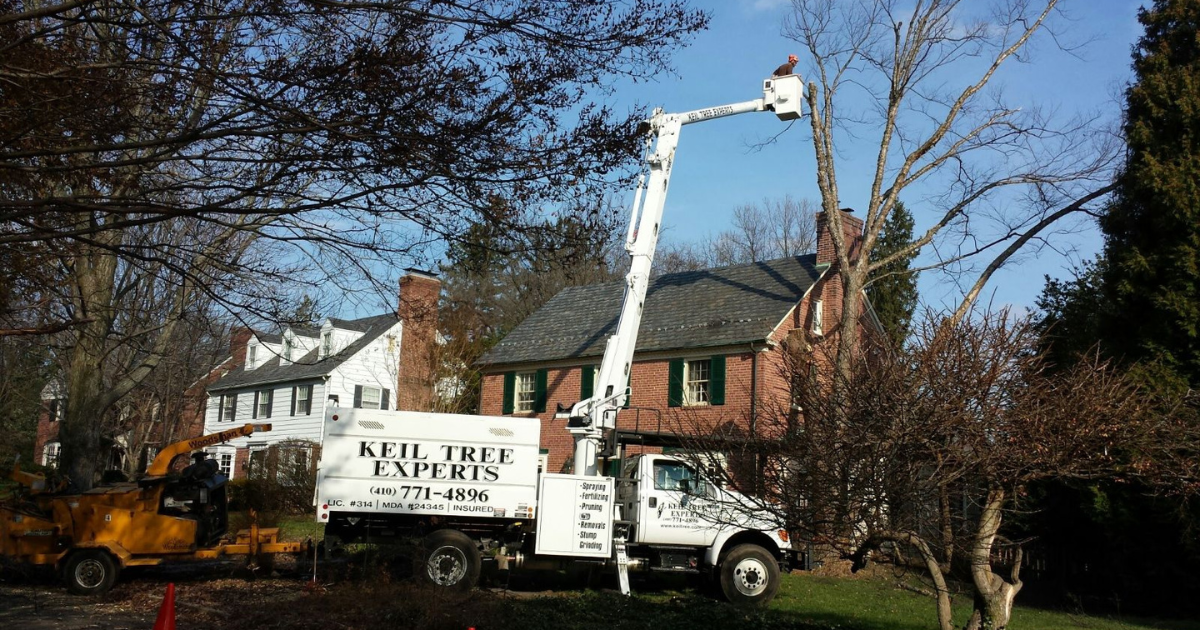
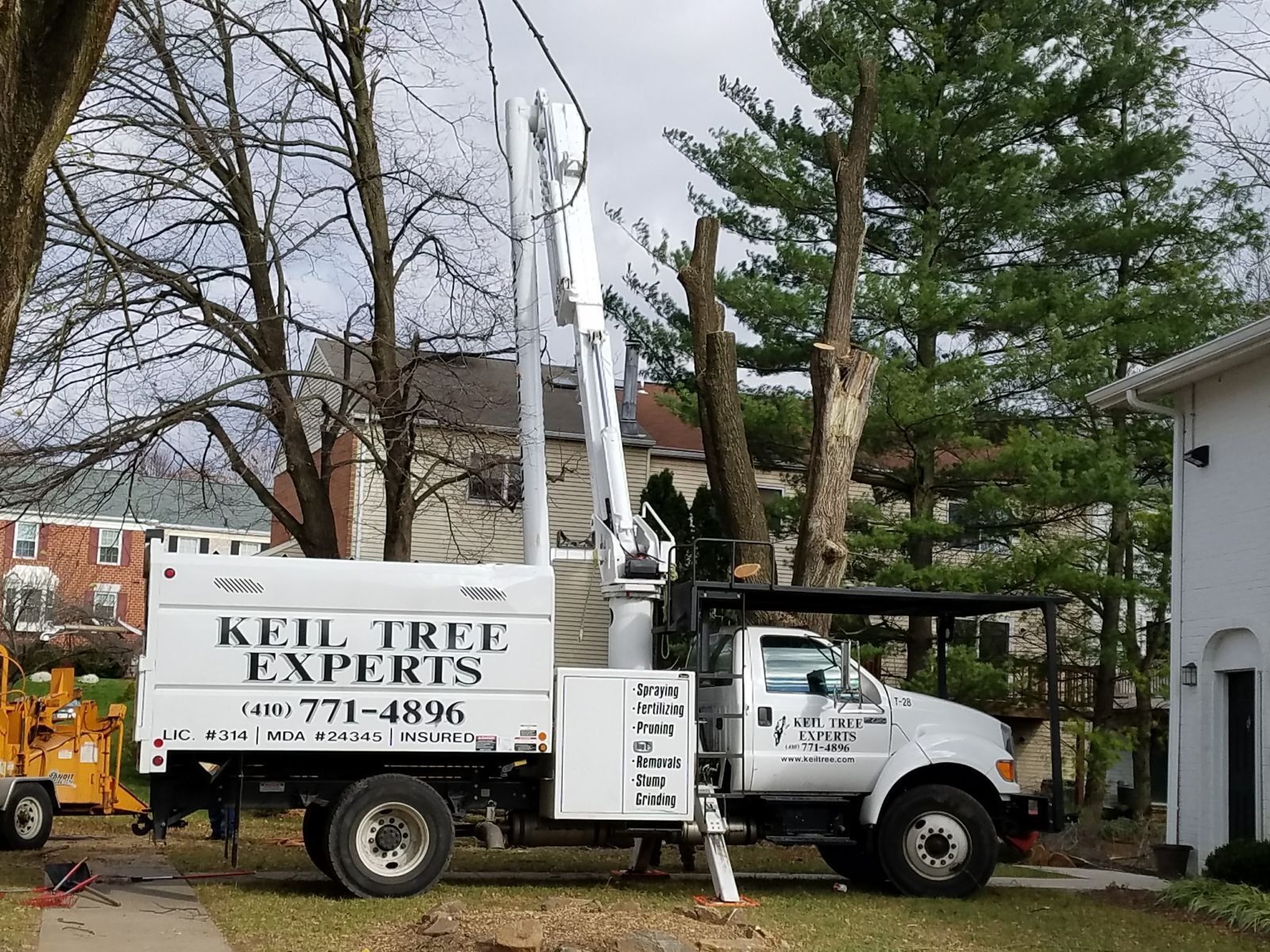
During the site evaluation, identify the proposed equipment route and any areas requiring protection. The contractor should determine whether the tree can be reached using ground equipment, climbing methods, rigging or a bucket truck.
Access planning should happen before the service date. It influences the work method, crew requirements, schedule and project cost.
Decide what happens to branches, logs and stumps
Cleanup responsibilities should be clear in the proposal. Some property owners want all branches and wood removed. Others may want usable logs retained in a designated location. The contractor should confirm what can be accommodated and whether moving material across the property changes the project scope.
When a tree is removed, ask whether stump grinding is included or priced separately. Leaving a stump may be acceptable in a wooded area, but it can interfere with mowing, planting or future construction in an actively used space.
The decision should reflect how the area will be used after removal rather than assuming every stump requires the same treatment.
Create a phased tree care plan
Large-property tree care does not always need to happen in one project. The first phase can address trees with immediate structural or access concerns. A second phase may include corrective pruning near buildings and driveways. Lower-priority maintenance can be scheduled later.
A phased plan allows the most important work to be completed first without treating every tree as equally urgent. It also gives homeowners a clearer basis for budgeting and scheduling.
The arborist should identify which recommendations are time-sensitive and which can be monitored. If a tree remains under observation, record the condition and when it should be evaluated again.
Prepare the property for winter tree work
Before the crew arrives, move vehicles, trailers, outdoor furniture and portable equipment away from the approved work and access areas.
Inform the company about septic systems, underground utilities, irrigation components, gates and areas of soft ground. Livestock and pets should remain secured away from equipment and falling debris.
One authorized property owner should be available to confirm the trees and approved scope before work begins. Marking or reviewing the trees together helps prevent confusion on wooded properties where several similar trees may stand close together.
The crew should also explain where equipment and debris will travel so the owner understands which sections of the property must remain clear.
Review nearby trees after major work
Removing a tree can change the exposure of neighboring trees, particularly along a wooded edge.
Trees that were previously protected may receive more wind or sunlight after the canopy opens. This does not automatically make them unsafe, but their new conditions should be considered.
After significant removal, ask whether adjacent trees require monitoring or limited corrective pruning. Avoid automatically thinning the entire area, since unnecessary removal can create further exposure.
The objective is to leave the surrounding tree population as stable and healthy as practical.
Plan fall tree care in Jarrettsville with Keil Tree Experts
Tree care on a large property should focus first on trees capable of affecting people, structures and access. A careful assessment can separate routine pruning from conditions requiring monitoring, planned removal or immediate attention.
Keil Tree Experts provides arborist evaluations, pruning, controlled tree removal and other professional tree services for Jarrettsville properties. As a second-generation, family-owned company with more than 40 years of experience, we recommend work based on the condition of the tree and the needs of the property.
Request a free estimate from Keil Tree Experts
Related tree care resources