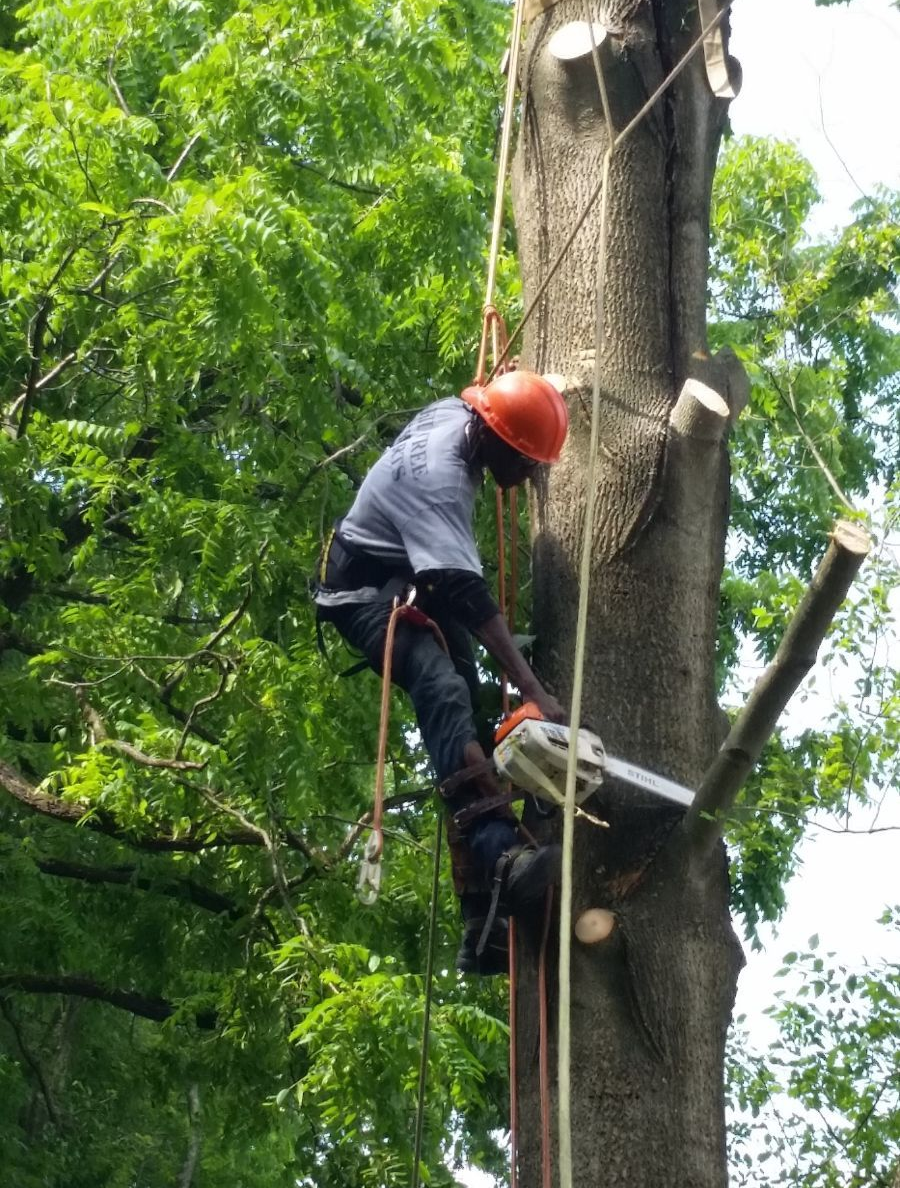
Signs of late-summer heat stress an arborist can evaluate
Signs of late-summer heat stress that an arborist can evaluate
By late summer, Maryland trees have already experienced months of high temperatures, humidity, changing rainfall, and competition for soil moisture. Homeowners in Cockeysville and surrounding communities may begin noticing curling leaves, dry edges, early leaf drop, or sections of the canopy that look thinner than they did earlier in the season.
These changes can be associated with heat stress, but appearance alone cannot establish the cause. Root damage, compacted soil, drainage problems, pests, disease, and previous storm damage can produce similar symptoms.
A certified arborist evaluates the complete tree and its growing environment before recommending a response. This helps distinguish a temporary reaction to summer conditions from a health or structural problem that may continue progressing into fall.
Have you noticed unusual changes in a tree on your property?
Learn about Keil Tree Experts’ certified arborist services in Cockeysville or call 410.771.4896 to request an evaluation.
Why late-summer tree stress can be difficult to interpret
Heat stress develops when a tree loses moisture faster than its roots can replace it. Extended high temperatures can increase moisture loss through the leaves, while dry or compacted soil may limit the water available to the roots.
The visible response depends on the tree species, age, condition, and location. A recently planted tree may react sooner than a mature specimen with an established root system. Trees growing near driveways, sidewalks, patios, or other heat-absorbing surfaces may also experience warmer and drier conditions than trees in open lawns or wooded areas.
However, a tree that looks dry may not simply need more water. Roots surrounded by saturated or poorly drained soil can produce wilting, yellowing, and thinning foliage that resembles drought stress. Watering more heavily without understanding the soil conditions could make the problem worse.
An arborist considers these overlapping possibilities instead of diagnosing the tree from one symptom.
Leaf scorch can be a visible sign of environmental stress
Leaf scorch often appears as browning or drying along the tips and outer edges of leaves. The affected tissue may become brittle, while the center of the leaf remains green for a period of time.
This pattern may appear when roots cannot supply enough moisture to replace what the leaves lose during hot weather. It can be more noticeable on exposed branches or sections of the canopy that receive intense afternoon sun.
Leaf scorch is still a symptom rather than a diagnosis. Similar browning may be related to root disturbance, soil chemistry, disease, excessive fertilizer, or other environmental conditions. The pattern across the canopy and the condition of the surrounding soil help provide the necessary context.
Does brown foliage mean a tree is dying?
Not necessarily. A tree may develop brown leaves during a stressful summer and recover when conditions improve. The seriousness of the change depends on how much of the canopy is affected, whether branches remain alive, and whether other symptoms are present.
Browning limited to a few exposed leaves may be less concerning than progressive discoloration throughout the canopy. Changes accompanied by peeling bark, fungal growth, dead branches, or a new lean require a different level of attention.
Homeowners should avoid assuming that removal is necessary based only on leaf color. Keil Tree Experts’ professional tree services in Maryland include arborist assessments intended to clarify whether a tree may benefit from care, monitoring, pruning, or another recommendation.
Premature leaf drop may be a protective response
Some trees drop leaves early when environmental stress makes it difficult to support the entire canopy. Reducing the number of leaves can help the tree limit continued moisture loss.
Early leaf drop does not automatically indicate permanent decline. The timing, volume, and distribution of the loss matter. A small amount of shedding during a hot, dry period is different from rapid defoliation affecting most of the canopy.
An arborist may also look for signs that point toward other causes, including pest activity, leaf disease, root problems, or changes in drainage. Knowing when the leaves began falling and whether the same pattern occurred in previous years can help with the evaluation.
A thinning canopy can reveal a longer-term concern
A canopy may appear more open when a tree produces fewer leaves, develops smaller foliage, or experiences branch dieback. More sunlight may pass through the crown, and one section may look noticeably thinner than the rest.
Summer heat can contribute to canopy thinning, but the underlying issue may have started much earlier. Excavation, soil compaction, grade changes, construction activity, or damage to the root zone can affect a tree gradually.
This is why the history of the property matters. Homeowners should mention recent landscaping, driveway work, utility installation, flooding, or changes in irrigation when discussing the tree with an arborist.
Can a tree health evaluation be completed from photographs?
Photographs can help document leaf color, canopy changes, or visible damage, but they rarely provide enough information for a complete tree health evaluation.
A photo cannot show soil conditions below the surface, the extent of root damage, internal decay, or the stability of a branch attachment. Lighting and distance can also make foliage appear healthier or more damaged than it is.
An onsite evaluation allows the arborist to compare the symptoms with the tree species, trunk, branches, root flare, surrounding soil, drainage, and recent property history.
Soil conditions play an important role in heat stress
Tree roots need access to both moisture and oxygen. Soil that becomes extremely dry may not provide enough water, while saturated or heavily compacted soil can limit oxygen and interfere with normal root function.
The area beneath a tree may also receive less water than homeowners expect. Dense turf, nearby plantings, pavement, or changes in grading can influence how rainfall reaches the roots.
Mulch can help moderate soil temperature and slow moisture loss when used appropriately. However, mulch piled deeply against the trunk can hold moisture around the bark and conceal the natural root flare.
Rather than relying on a universal watering schedule, an arborist can consider the tree species, soil condition, drainage, weather, and size of the root zone before recommending changes.
Dead twigs do not always mean tree trimming is the first solution
Homeowners may notice small dead twigs or branches near the end of a hot summer. Some interior twig loss can occur naturally where leaves and branches receive limited sunlight. More extensive dieback may indicate a broader concern.
Tree trimming should have a specific purpose. Removing dead, damaged, or structurally problematic branches may be appropriate, but excessive pruning can reduce the tree’s ability to produce energy and respond to stress.
The location and amount of deadwood should be considered before work begins. An arborist can determine whether pruning would support the tree, whether another condition should be addressed first, or whether monitoring is more appropriate.
Unsure whether your tree needs pruning, treatment, monitoring, or another type of care?
Explore Keil Tree Experts’ certified arborist services for information about tree health, soil conditions, structural concerns, and customized care recommendations.
When late-summer symptoms deserve timely attention
A closer evaluation may be appropriate when symptoms affect a large portion of the canopy, continue spreading, or appear alongside dead limbs, trunk damage, fungal growth, exposed roots, or changes in the soil around the tree.
Location also matters. A declining branch above a home, driveway, walkway, play area, or other frequently used space creates different considerations than a similar branch in an isolated part of the property.
If a tree suddenly leans, the soil lifts around its base, or a large branch appears cracked or unstable, people should remain clear of the area. These conditions may involve an immediate safety concern rather than ordinary heat stress.
An arborist can evaluate both tree health and structural condition. The resulting recommendation may involve monitoring, targeted tree care, appropriate tree trimming, treatment, or removal when preserving the tree is no longer a safe or practical option.
What information can help an arborist evaluate the tree?
Homeowners do not need to diagnose the problem before requesting help. However, a few observations can provide valuable context.
It helps to know when the symptoms began, whether they appeared suddenly or gradually, and whether the tree has shown similar changes in previous summers. Recent storms, construction, excavation, irrigation changes, chemical applications, and drainage problems should also be mentioned.
Photos taken safely from the same location over several weeks can show whether the canopy is stabilizing or continuing to decline. Homeowners should not climb the tree, cut questionable branches, or disturb roots to collect this information.
Late summer provides a useful decision point
Evaluating a tree near the end of summer can help separate seasonal stress from a condition that should be addressed before fall and winter weather.
If the tree is responding temporarily to heat, the homeowner may receive guidance about monitoring and appropriate care. If another problem is contributing to the symptoms, identifying it earlier may provide more options than waiting for substantial decline or structural damage.
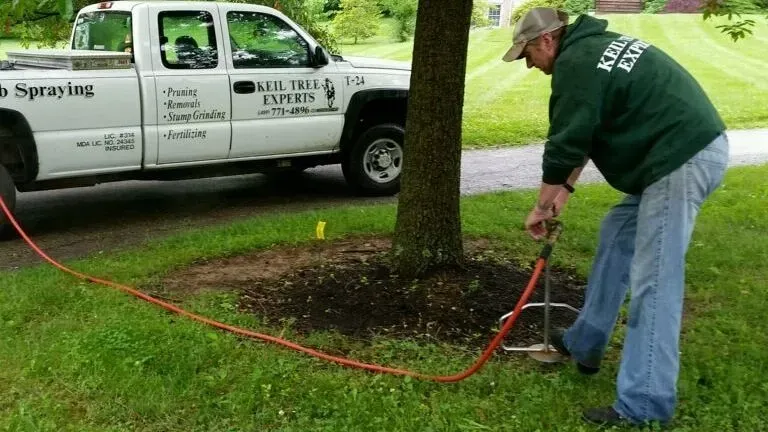
Keil Tree Experts has provided tree care in Maryland for more than 40 years. Its certified arborists evaluate tree health, structural concerns, soil conditions, and property context before recommending an appropriate next step.
If a tree on your Cockeysville or Baltimore County property looks different after the summer heat,
contact Keil Tree Experts to request an onsite assessment.