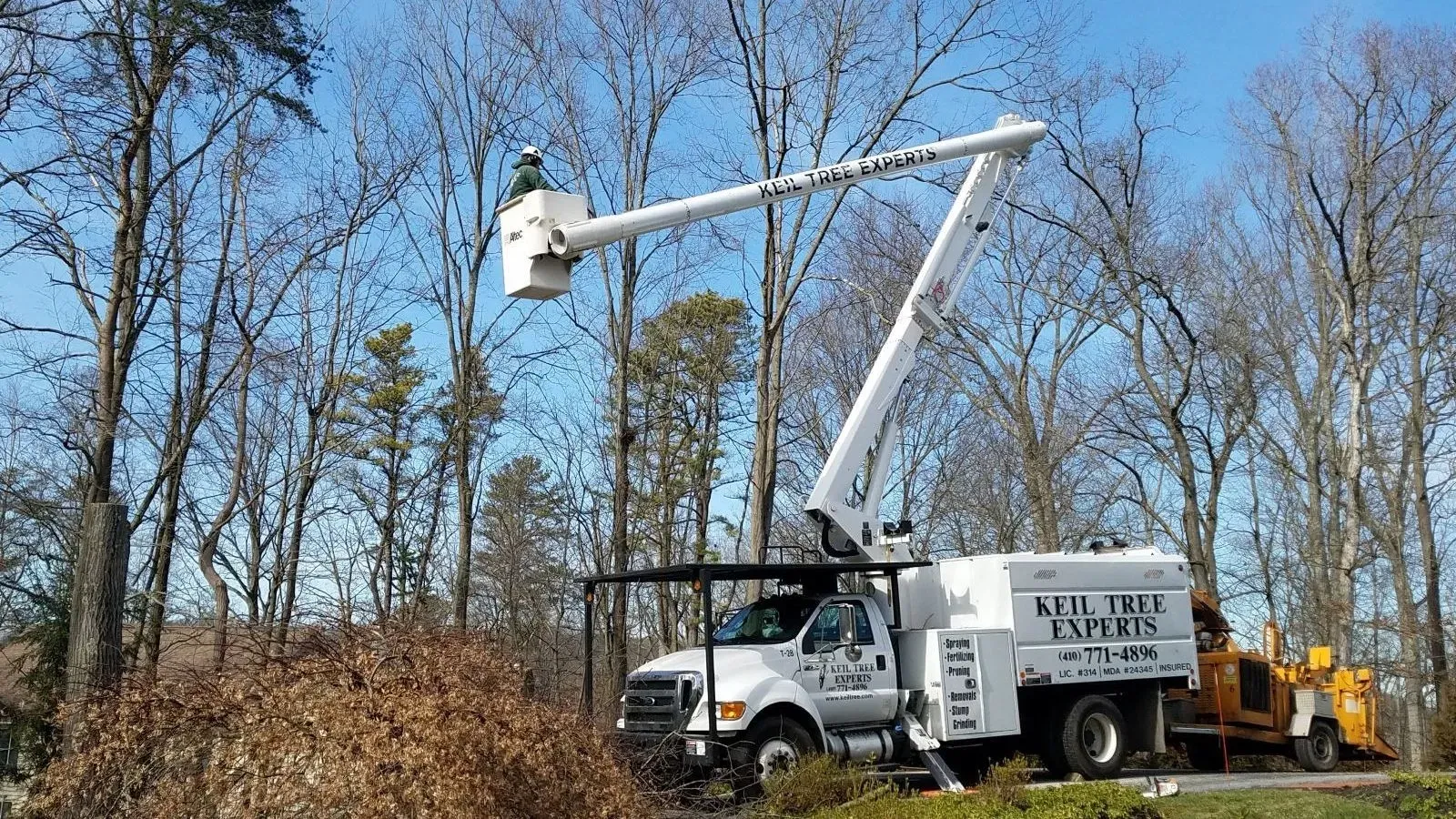
Tree Removal or Corrective Pruning in Owings Mills: What Should Be Done Before Winter?
A tree with dead branches, uneven growth or a noticeable lean does not automatically need to be removed. In many situations, selective pruning can reduce risk while preserving the healthy parts of the tree. In others, decay, structural weakness or root movement may make removal the safer long-term decision.
Fall is a useful time for Owings Mills homeowners to evaluate questionable trees before winter wind, ice and saturated ground place additional stress on them. With fewer leaves obstructing the view, certain branch and trunk conditions may also become easier to observe.
At Keil Tree Experts, we begin by evaluating the tree, its surroundings and the potential consequences of branch or trunk failure. Our recommendation is based on whether the tree can remain safely on the property—not simply on whether it can be cut.
Homeowners who have noticed a change in a mature tree can begin with our certified arborist services in Owings Mills, MD.
Why the decision should begin with the complete tree
One damaged branch rarely tells the entire story. Before recommending pruning or removal, an arborist considers the canopy, trunk, root area and location of the tree.
A tree may have several dead branches while its trunk and root system remain structurally sound. Corrective pruning could remove the immediate concern and improve the canopy’s balance. Conversely, a tree with relatively healthy foliage may contain a significant trunk cavity, weak union or root problem that makes pruning alone insufficient.
Location changes the level of concern. A weak branch over an unused wooded area presents a different risk from one extending over a roof, driveway, walkway or neighboring property.
The evaluation should therefore answer two separate questions: what is happening to the tree, and what could be affected if part of it fails?
When corrective pruning may be the appropriate choice
Corrective pruning is intended to address defined structural or clearance concerns without removing more of the canopy than necessary.
It may be recommended when the tree remains generally stable but contains dead, damaged, crossing or poorly attached branches. Pruning can also create appropriate clearance from a roof, driveway or other frequently used area.
Dead or damaged branches are limited to part of the canopy
A tree does not always need to be removed because it contains deadwood. If the decline is limited and the remaining structure is suitable, removing selected branches may reduce risk while allowing the tree to remain.
The arborist should determine why the branches died. Storm damage, crowding, environmental stress and underlying health problems can produce similar visible symptoms but may require different responses.
Branches have weak or crowded connections
Branches growing closely together may rub, compete or form weak connections. These conditions can become more important as the limbs increase in size and weight.
Selective pruning can reduce pressure on certain unions and improve canopy structure. The work should preserve an appropriate amount of live foliage because excessive removal can create additional stress.
The tree needs clearance rather than removal
Branches near a roof, driveway, walkway or service line may require attention even when the tree itself is healthy.
The objective should be to create practical clearance without permanently damaging the canopy. Topping or removing large portions of the tree indiscriminately can stimulate weak growth and create new structural problems.
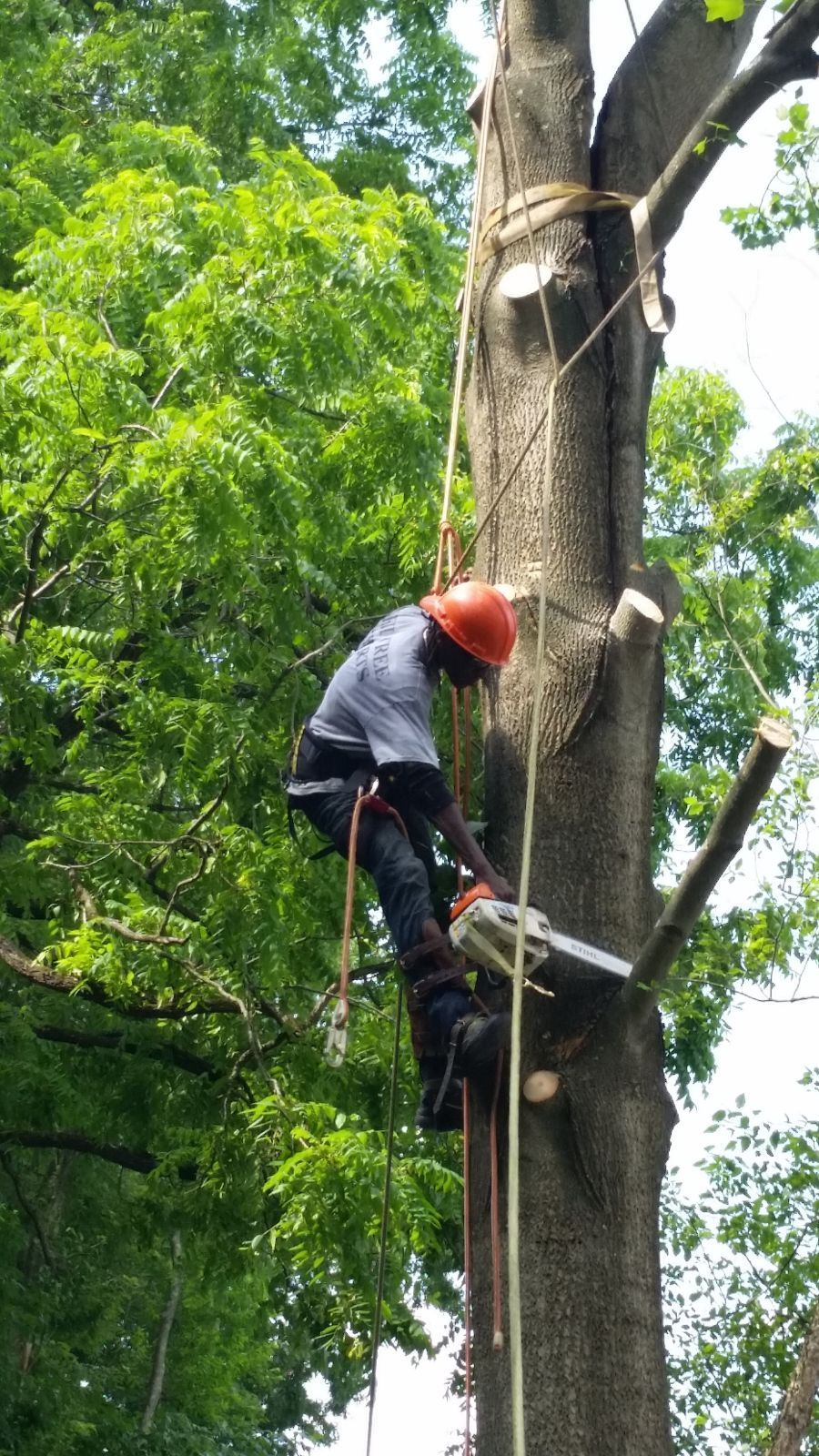
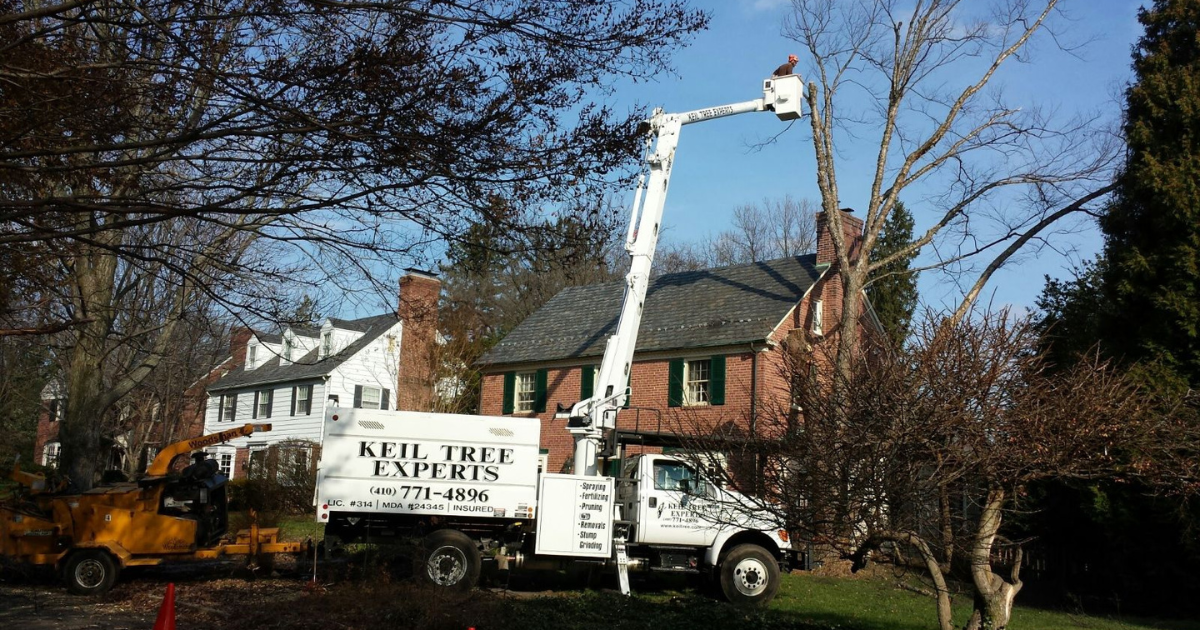
Keil Tree Experts provides professional tree pruning and trimming based on tree condition, growth patterns and the needs of the surrounding property.
When removal may be the safer recommendation
Removal becomes more likely when the tree has lost enough structural integrity that pruning cannot reasonably reduce the risk.
This does not mean every leaning, hollow or aging tree must come down. The severity, location and combination of conditions matter. An arborist evaluates whether the tree has a viable structure and whether the remaining risk can be managed.
The trunk has major cracks or decay
Open cracks, cavities and decayed areas can affect the trunk’s ability to support the canopy. Fungal growth near the trunk or root flare may also justify closer investigation, particularly when accompanied by declining foliage or dead branches.
The visible opening does not always reveal the complete extent of internal deterioration. An arborist must consider the location of the defect and how much sound structure appears to remain.
The root area shows movement or disruption
Roots provide both stability and access to water and nutrients. Construction, soil compaction, grading changes, prolonged saturation and physical damage can affect their performance.
A recent increase in leaning, lifted soil or exposed roots on one side may indicate movement that requires prompt attention. Homeowners should not attempt to test the tree by pushing, pulling or digging around the base.
Several structural problems appear together
One manageable condition may not justify removal. Multiple concerns occurring together can change the recommendation.
For example, a mature tree with trunk decay, a growing lean and significant deadwood toward a house presents a different situation from a tree with one damaged limb over an open lawn.
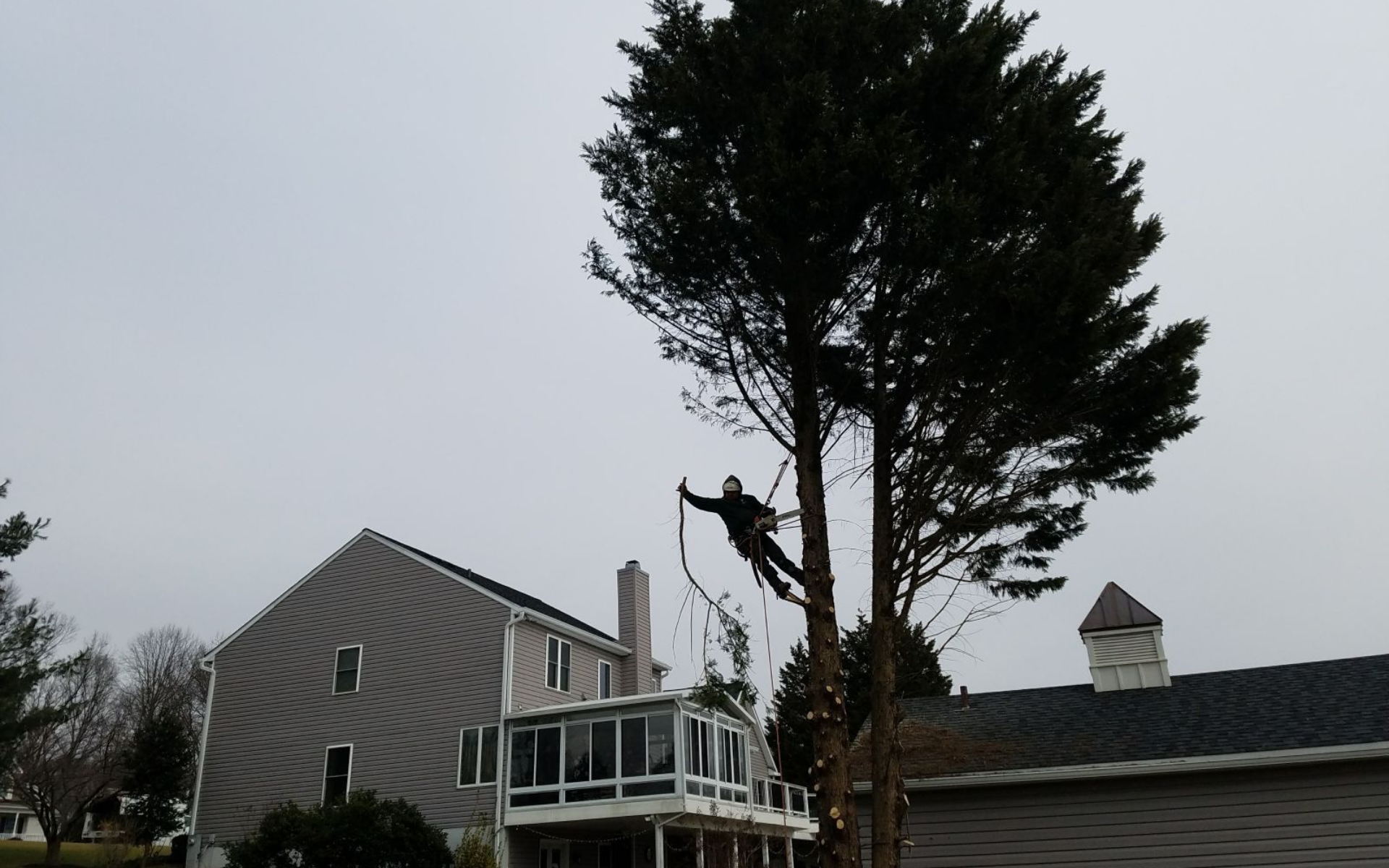
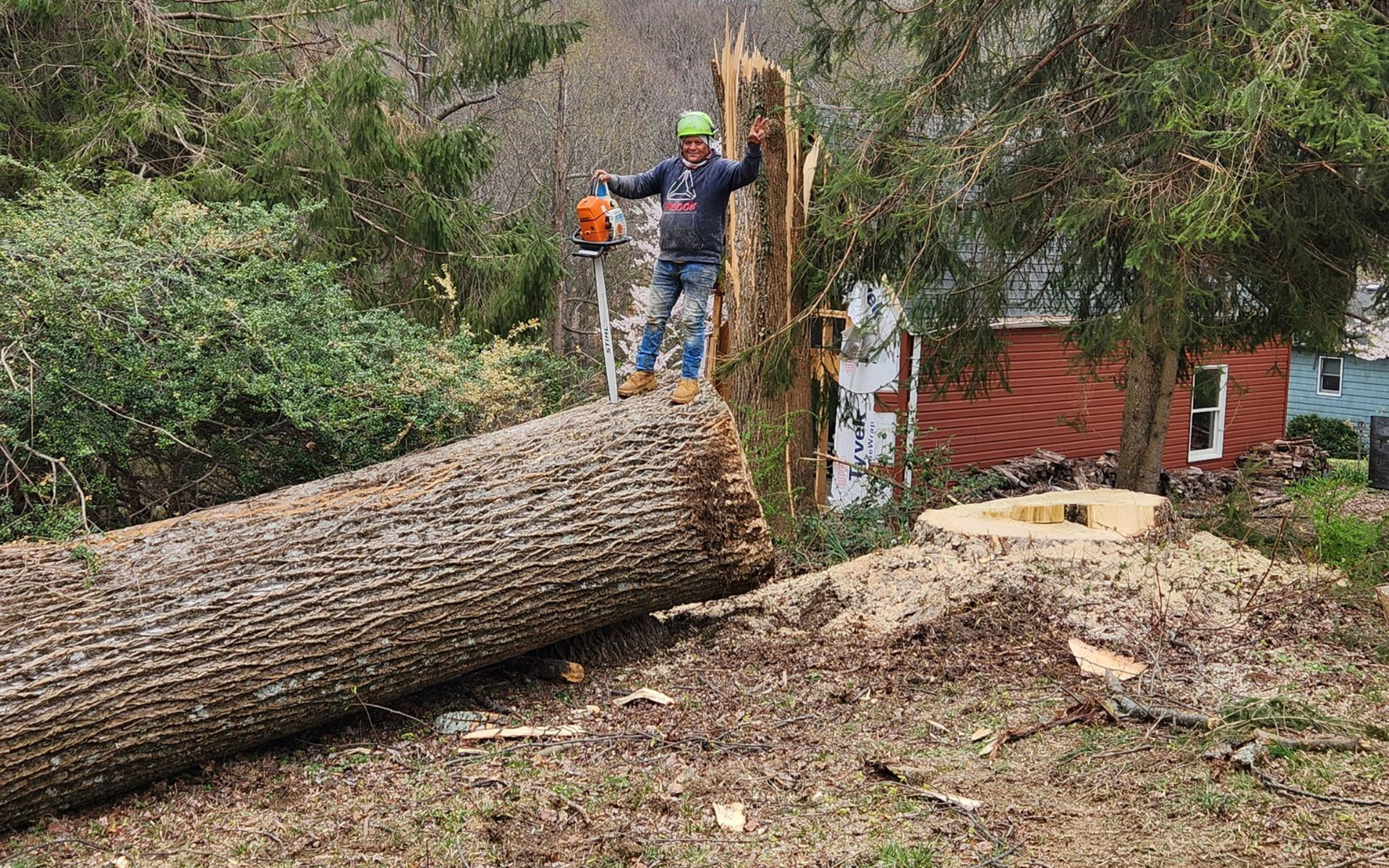
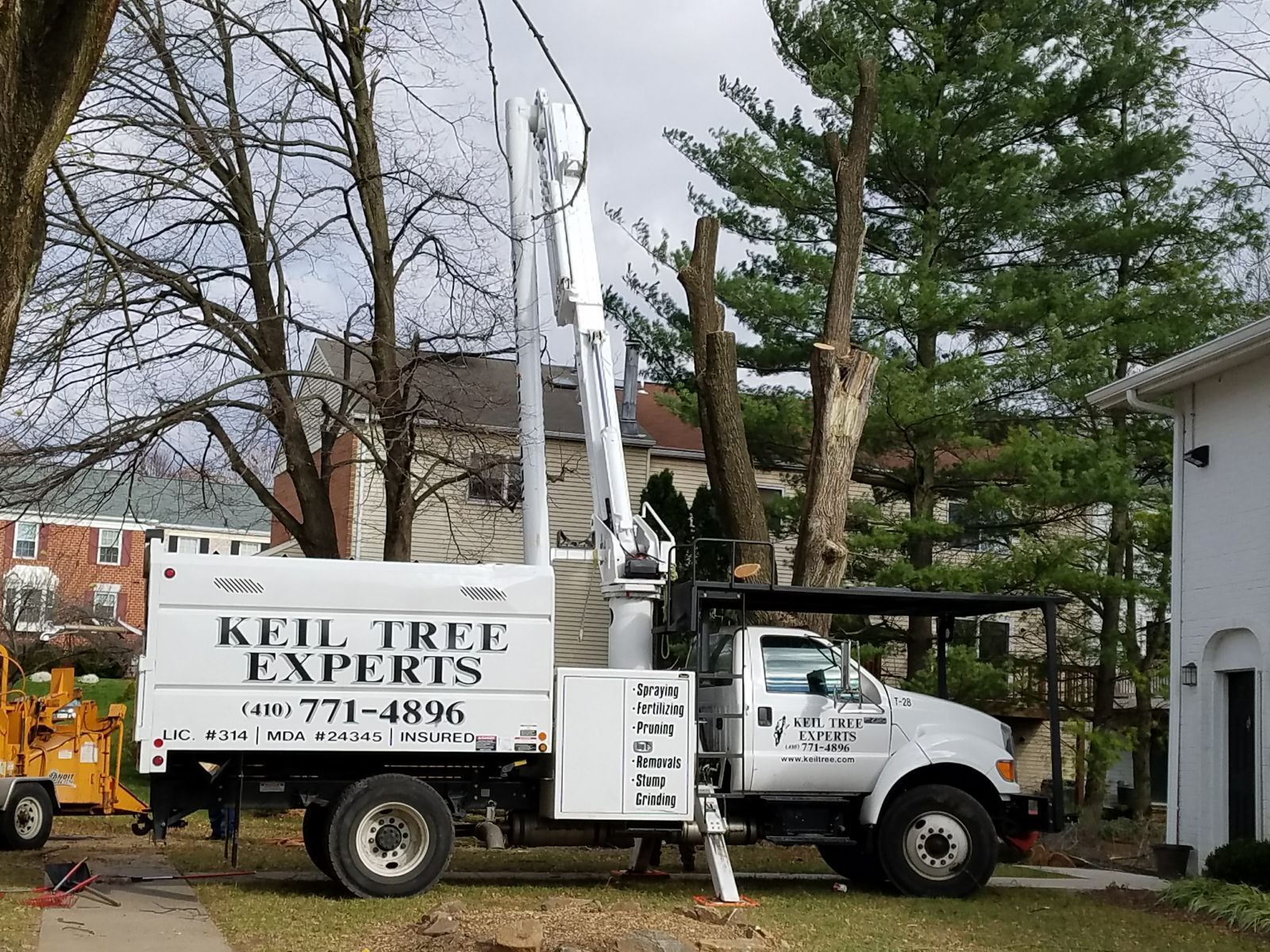
When removal is necessary, Keil Tree Experts uses controlled methods and appropriate equipment to manage the tree around homes, driveways, fences and surrounding landscaping. Learn more about tree removal in Owings Mills, MD.
How winter conditions affect an already weakened tree
Winter weather does not create every tree problem, but it can expose weaknesses that were already present.
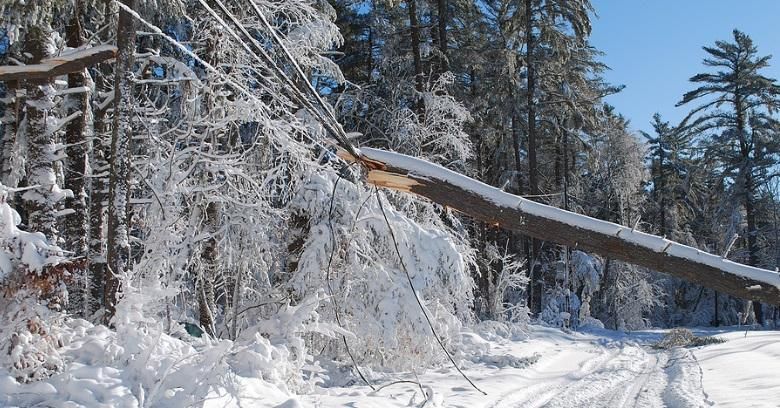
Wind places repeated force on the canopy and branch attachments. Ice or wet snow can add weight to limbs. Saturated or repeatedly freezing soil may affect conditions around the root system.
A healthy, well-structured tree may tolerate these seasonal stresses. A tree with deadwood, cracks, weak branch unions or root instability has less capacity to respond.
That is why fall evaluation is valuable. It gives homeowners time to address visible concerns through pruning or planned removal before a compromised tree becomes an emergency during severe weather.
If a tree has already fallen, split or developed a hanging branch after a storm, use Keil Tree Experts’ 24-hour emergency tree service in Owings Mills instead of approaching the damaged area.
Concerned about a leaning tree, dead branches or structural changes before winter?
Request an arborist evaluation from Keil Tree Experts to determine whether corrective pruning, monitoring or tree removal is appropriate for your Owings Mills property.
What an arborist evaluates during the property visit
The evaluation begins with the homeowner’s observations. Tell the arborist when the change was first noticed, whether it followed a storm or construction project and whether branches have fallen recently.
The arborist then examines the tree in the context of the property. This typically includes the canopy, branch unions, trunk, visible root area, surrounding soil and nearby structures.
Access is also part of the assessment. Fences, slopes, landscaping, neighboring properties and limited driveway space can influence how pruning or removal would be completed.
At the end of the visit, the homeowner should understand:
- Which conditions were observed
- Whether the concern is primarily structural, health-related or both
- Why pruning, monitoring or removal is being recommended
- How the crew would access and protect the work area
- Whether debris removal and stump grinding are included separately
A clear recommendation connects the visible condition with the proposed work. Homeowners should not be left with a generic instruction to remove a tree without understanding the reason.
Why removing too many branches can make the problem worse
It can be tempting to request extensive trimming before winter, especially when a large canopy extends over the property. More cutting, however, does not always create a safer tree.
Removing too much live foliage can reduce the tree’s ability to produce energy. Large, unnecessary cuts also create wounds and may alter the canopy’s balance.
Corrective pruning should target specific concerns while retaining healthy structure. The amount and location of work depend on the tree species, maturity, condition and objectives of the project.
If the tree cannot be made reasonably safe through selective pruning, continuing to remove branches may only postpone a larger decision. The arborist should explain that limitation before work begins.
What shapes the scope of an Owings Mills tree project
The final scope depends on more than the height of the tree. A large tree in an open area may be more accessible than a smaller tree between a house, fence and neighboring yard. Branch spread, nearby structures, terrain and equipment access influence how the work must be performed.
The proposal should identify which trees and branches are included, the recommended service, cleanup responsibilities and whether the stump will remain.
If removal is selected, stump grinding should be discussed before the project is scheduled. The remaining stump can affect mowing, planting and future use of the yard. Keil Tree Experts offers professional stump grinding when homeowners want to reclaim the area after removal.
Prepare the property for pruning or removal
Once the work is scheduled, move vehicles, furniture, decorations and portable equipment away from the designated access and work areas.
Inform the company about gates, septic components, irrigation systems, underground features or other property conditions that may influence equipment movement. Pets and children should remain inside and away from active operations.
The crew should confirm the trees and branches included before cutting begins. One authorized homeowner should remain available if an unexpected condition requires a decision.
Professional tree work involves falling debris, cutting equipment and controlled movement of heavy branches. Homeowners should observe only from the safe area established by the crew.
Plan beyond the immediate concern
Addressing one questionable tree is also an opportunity to review nearby trees with similar exposure or growing conditions.
Trees along the same wooded edge may have experienced similar wind, soil saturation or construction activity. This does not mean they require the same service, but identifying early concerns can help homeowners plan maintenance instead of responding to repeated emergencies.
After pruning, the arborist may recommend monitoring a particular union, canopy section or root area. After removal, the homeowner may need to decide whether stump grinding, grading or future planting belongs in the next phase.
Keeping the written proposal and any photographs creates a useful record for future assessments.
Schedule tree removal or corrective pruning in Owings Mills
The correct service depends on whether the tree can remain structurally suitable for its location. Corrective pruning may preserve a healthy tree by addressing deadwood, weak branches or clearance problems. Removal may be more appropriate when decay, root instability or multiple structural defects create a risk that pruning cannot adequately reduce.
Keil Tree Experts provides tree services in Owings Mills, MD, including certified arborist evaluations, corrective pruning, controlled tree removal, stump grinding and emergency response.
As a second-generation, family-owned company with more than 40 years of experience, we provide practical recommendations based on the tree and the property—not a predetermined service.
Request a free tree service estimate
Related tree care resources